Your free printable prepper checklist for the Cowichan Valley · PDF
Unregulated drug-supply education
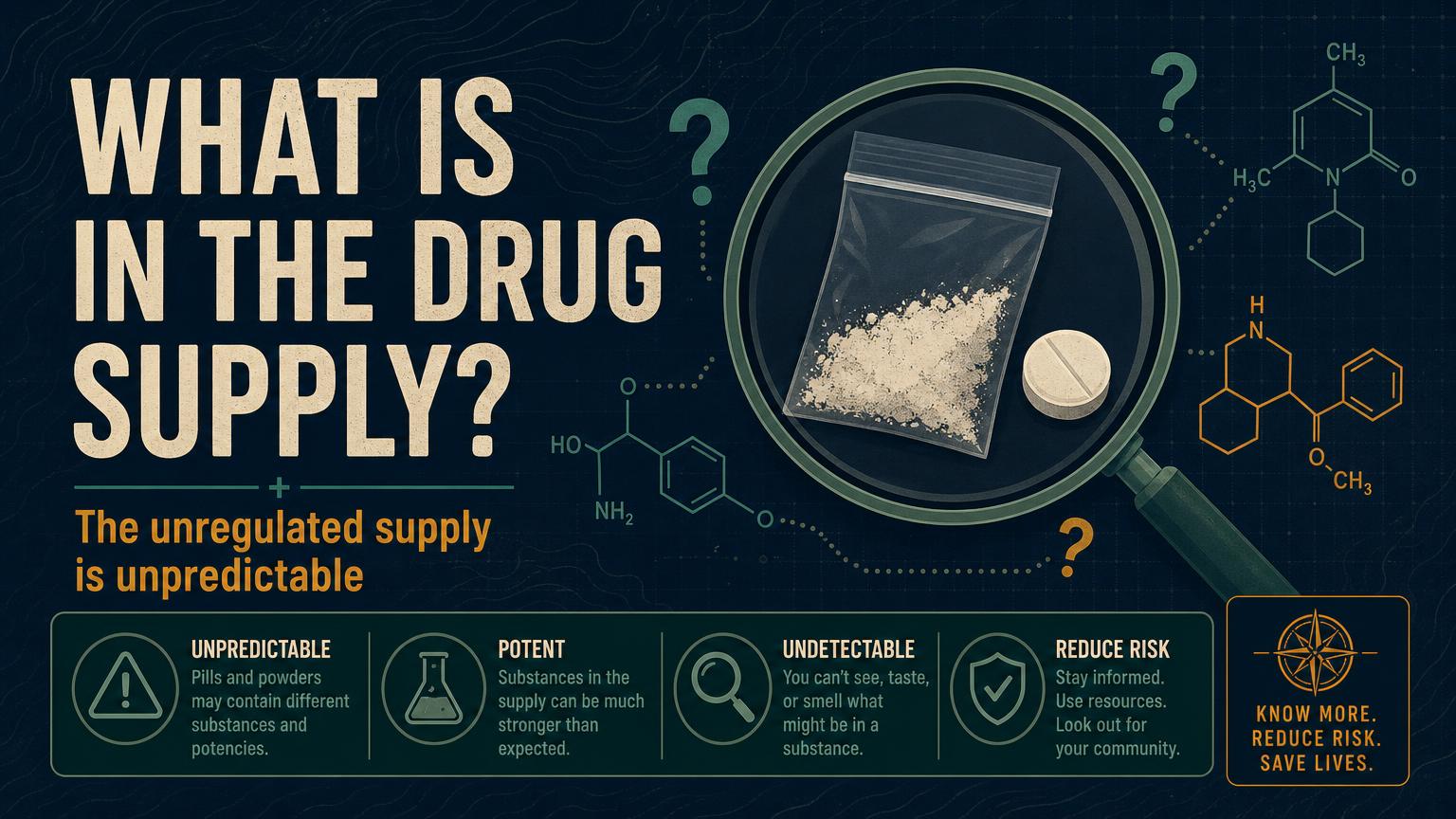
What Is Really in the Street Drug Supply?
Unexpected substances, dangerous combinations and what they can do to the body and mind. Products sold as fentanyl, heroin, cocaine, methamphetamine, MDMA or prescription medication may contain unexpected opioids, sedatives, stimulants, cutting agents or other chemicals.
Important: No list can identify everything that may appear in the unregulated drug supply. Contents can change by community, supplier, batch and even within the same bag or pill. Colour, smell, taste, texture, packaging and familiarity with a supplier cannot confirm what a substance contains.
This page provides general health and safety education. It does not replace medical advice, emergency care, toxicology testing or professional drug checking.
Why the Supply Is Unpredictable
Unregulated substances may be manufactured, mixed or divided without reliable quality control. That means:
The expected drug may be partially or completely replaced
Potency can vary widely
Several depressants may be present together
Stimulants may contain unexpected opioids
Counterfeit pills may closely resemble pharmacy medication
One part of a bag may contain more of a substance than another
Familiar colour, logo or packaging does not prove safety
A familiar supplier may not know what is actually present
Test strips and drug checking can reduce uncertainty but cannot guarantee safety
The substance someone expects and the substance they receive may not be the same.
Showing 23 of 23 educational cards.
Drugs Sold as “Down,” Heroin or Fentanyl
Synthetic opioid
Fentanyl and Fentanyl Analogues
Powerful opioidOverdose risk
Where it may appear
Drugs sold as “down”
Heroin
Counterfeit opioid tablets
Other unregulated powders
Occasionally unexpected non-opioid substances
What it is
Fentanyl is a highly potent synthetic opioid. Related fentanyl analogues may vary in strength and duration.
Possible health effects
Extreme sleepiness
Slow, shallow or stopped breathing
Pinpoint pupils
Loss of consciousness
Gurgling, snoring or choking sounds
Blue, grey or pale lips and skin
Cold or clammy skin
Vomiting and choking
Brain injury caused by lack of oxygen
Coma
Death
Strong physical dependence
Severe withdrawal
Naloxone: Naloxone can temporarily reverse opioid effects. More than one dose may be needed, and symptoms can return.
Safety note: A person may not realize fentanyl is present because it cannot be reliably identified by appearance, smell or taste.
Extremely potent synthetic opioid
Carfentanil
Powerful opioidOverdose risk
Where it may appear
Drugs sold as fentanyl or heroin
Unregulated opioid mixtures
Counterfeit tablets
What it is
Carfentanil is an extremely potent synthetic opioid. Very small amounts have caused severe poisoning.
Possible health effects
Very rapid breathing suppression
Sudden loss of consciousness
Severe oxygen deprivation
Coma
Brain injury
Death from very small amounts
Naloxone: Give naloxone immediately when opioid poisoning is suspected. Multiple doses and emergency medical care may be required.
Safety note: Some fentanyl test strips may not reliably detect every fentanyl analogue.
Highly potent synthetic opioid group
Nitazenes
Powerful opioidOverdose risk
Where it may appear
Opioid powders
Drugs sold as heroin or fentanyl
Counterfeit pills
Other unexpected mixtures
What it is
Nitazenes are a group of highly potent synthetic opioids. Examples may include metonitazene, isotonitazene, protonitazene, etonitazene-related substances and other nitazene analogues.
Possible health effects
Severe breathing suppression
Sudden unconsciousness
Oxygen deprivation
Coma
Death
Strong dependence
Opioid withdrawal
Naloxone: Naloxone should be given. Multiple doses may be required.
Safety note: Nitazenes may not be identified through basic visual inspection or every available test strip.
Sedative or central nervous system depressant
Benzodiazepines and Designer Benzodiazepines
Designer benzodiazepineCounterfeit-pill risk
Where it may appear
Drugs sold as “down”
Fentanyl mixtures
Counterfeit Xanax
Other counterfeit sedative pills
What it is
Unregulated benzodiazepine-like drugs such as bromazolam, etizolam and flualprazolam have been detected in the opioid supply. Strength can vary widely between batches.
Possible health effects
Heavy or prolonged sedation
Memory loss
Blackouts
Slurred speech
Confusion
Loss of coordination
Falls and injuries
Vomiting and choking
Long periods of unconsciousness
Increased poisoning risk when combined with opioids
Physical dependence
Severe withdrawal
Seizures during withdrawal
Naloxone: Naloxone does not reverse benzodiazepines. However, naloxone must still be given when an opioid may also be present.
Emergency concern: A person may begin breathing again after naloxone but remain unconscious because a sedative is still active. Continue monitoring breathing and call emergency services.
Veterinary sedative
Medetomidine
Veterinary sedative
Where it may appear
Unregulated opioid supply
Drugs sold as fentanyl or “down”
What it is
Medetomidine is a veterinary sedative that has been detected in the unregulated opioid supply.
Possible health effects
Very slow heart rate
Dangerous changes in blood pressure
Heavy sedation
Prolonged unconsciousness
Weakness and confusion
Increased risk of breathing complications
Severe withdrawal
Rapid heart rate during withdrawal
Dangerously high blood pressure during withdrawal
Naloxone: Naloxone does not reverse medetomidine. Give naloxone anyway because opioids may also be present.
Emergency concern: The person may require rescue breathing, airway support, heart monitoring and hospital treatment.
Veterinary sedative
Xylazine (sometimes called “tranq”)
Veterinary sedativeWound risk
Where it may appear
Fentanyl
Heroin
Drugs sold as “down”
Other opioid mixtures
What it is
Xylazine is a veterinary sedative that may be mixed into the unregulated opioid supply.
Possible health effects
Heavy sedation
Unconsciousness
Slow heart rate
Low blood pressure
Difficulty breathing
Reduced awareness
Increased poisoning risk when combined with opioids
Possible skin and wound effects
Painful skin wounds
Ulcers
Tissue damage
Blackened or dying tissue
Serious infections
Wounds that heal slowly
Possible need for surgery
Possible amputation in severe untreated cases
Naloxone: Naloxone does not reverse xylazine. Give naloxone because an opioid may also be present.
Emergency concern: Spreading redness, swelling, severe pain, pus, foul smell, fever, black tissue or exposed deeper tissue requires medical care.
Xylazine-related wounds may occur even when the drug was not injected directly into the wound area. Wounds can appear on parts of the body far from an injection site, and they may develop in people who smoke or snort a substance.
Drugs Sold as Cocaine or Crack
Unexpected opioid contamination
Unexpected Fentanyl, Carfentanil or Nitazenes
Powerful opioidOverdose risk
Where it may appear
Powder cocaine
Crack cocaine
What it is
Potent opioids have been detected in stimulant samples. Someone without opioid tolerance may be affected by a very small amount.
Possible health effects
Sudden unconsciousness
Slow or stopped breathing
Opioid poisoning in someone without opioid tolerance
Brain injury
Death
Naloxone: Naloxone should be available wherever unregulated cocaine or crack is used.
Safety note: Someone may believe they are experiencing a stimulant reaction while actually having an opioid poisoning.
Veterinary medication and cocaine cutting agent
Levamisole
Cocaine cutting agentWound risk
Where it may appear
Powder cocaine
Crack cocaine
What it is
Levamisole is a veterinary medication that has frequently been detected as a cocaine cutting agent.
Possible health effects
Destruction of infection-fighting white blood cells
Fever
Mouth sores
Sore throat
Severe infections
Sepsis
Inflamed or damaged blood vessels
Purple, red or black skin lesions
Painful ulcers
Tissue death
Damage around the ears, face, arms or legs
Possible kidney, liver or neurological injury
Naloxone: Naloxone does not reverse levamisole effects.
Emergency concern: Fever, mouth sores, severe weakness, spreading skin damage or signs of infection require urgent medical assessment.
Cutting agent and former pain medication
Phenacetin
Cocaine cutting agent
Where it may appear
Cocaine
Crack cocaine
Other unregulated powders
What it is
Phenacetin is a withdrawn pain medication that can be found as a cutting agent.
Possible health effects
Kidney damage
Damage to red blood cells
Reduced oxygen delivery
Increased cancer risk after significant exposure
Urinary-tract and kidney-related cancers
Naloxone: Naloxone does not reverse phenacetin effects.
Safety note: Health problems may develop after repeated exposure rather than immediately.
Local anesthetic cutting agents
Lidocaine, Benzocaine and Other Numbing Agents
Cocaine cutting agentHeart risk
Where it may appear
Cocaine
Crack cocaine
Other unregulated powders
What it is
Numbing agents can imitate the numbing effect associated with cocaine, which is why they may be added.
Possible health effects
Dizziness
Confusion
Nausea
Seizures
Abnormal heart rhythms
Low blood pressure
Breathing problems
Collapse
Reduced ability of the blood to carry oxygen
Blue or grey skin
Death in severe poisoning
Naloxone: Naloxone does not reverse local anesthetic poisoning.
Emergency concern: Numbness does not prove that a substance is cocaine or that it is pure.
Additional stimulants
Methamphetamine, Amphetamine or Excessive Caffeine
Synthetic stimulantHeart risk
Where it may appear
Powder cocaine
Crack cocaine
What it is
Other stimulants may be substituted for or mixed into cocaine, changing strength and duration.
Possible health effects
Rapid heartbeat
Irregular heartbeat
High blood pressure
Chest pain
Heart attack
Stroke
Panic
Agitation
Paranoia
Overheating
Dehydration
Tremors
Seizures
Stimulant-induced psychosis
Naloxone: Naloxone does not reverse stimulants.
Safety note: Stimulants may temporarily mask opioid sedation, causing someone to take more before realizing an opioid is present.
Drugs Sold as Crystal Methamphetamine
Unexpected opioid contamination
Unexpected Fentanyl or Other Opioids
Powerful opioidOverdose risk
Where it may appear
Crystal methamphetamine
Other stimulant powders
What it is
Opioids have been detected in samples sold as crystal methamphetamine.
Possible health effects
Sudden unconsciousness
Slow or stopped breathing
Fatal opioid poisoning
Mixed stimulant agitation and opioid sedation
Confusing or rapidly changing symptoms
Naloxone: Give naloxone when someone is unresponsive or not breathing normally, even when the expected drug was methamphetamine.
Sedatives in a stimulant supply
Benzodiazepines, Medetomidine or Other Sedatives
Designer benzodiazepineVeterinary sedative
Where it may appear
Crystal methamphetamine
Other unregulated stimulants
What it is
Sedatives can be found in stimulant samples, producing unexpected sedation.
Possible health effects
Blackouts
Sudden loss of coordination
Prolonged unconsciousness
Slow heart rate
Dangerous blood-pressure changes
Vomiting and choking
Injury while sedated
Increased poisoning risk
Naloxone: Naloxone does not reverse sedatives, but it should still be given if an opioid may also be present.
Synthetic stimulant
Synthetic Cathinones (sometimes called “bath salts”)
Synthetic stimulantHeart risk
Where it may appear
Crystal methamphetamine
MDMA
Unknown powders
What it is
Synthetic cathinones are laboratory-made stimulants that may be substituted for other stimulants.
Possible health effects
Extreme agitation
Severe panic
Paranoia
Hallucinations
Confusion
Psychosis
High body temperature
Heavy sweating
Rapid heart rate
High blood pressure
Seizures
Muscle breakdown
Kidney damage
Organ failure
Death
Naloxone: Naloxone does not reverse synthetic cathinones.
Emergency concern: Call 911 for severe agitation, chest pain, seizures, collapse, extreme overheating or inability to respond normally.
Unknown contaminants and manufacturing residues
Manufacturing Chemicals and Unidentified Fillers
Cutting agent
Where it may appear
Crystal methamphetamine
Unregulated powders and crystals
What it is
Residues from manufacturing, or unidentified fillers, can be found in unregulated products.
Possible health effects
Burning or irritation of the nose and throat
Lung irritation
Headaches
Nausea
Vomiting
Vein damage
Tissue injury
Infections
Liver strain
Kidney strain
Unknown long-term effects
Naloxone: Naloxone does not reverse these substances.
Safety note: Risks cannot be predicted without laboratory drug checking.
Drugs Sold as MDMA or Ecstasy
Pills, powders or crystals sold as MDMA may contain little MDMA, no MDMA or a mixture of several other substances.
Substituted stimulants
Methamphetamine, Amphetamine or Cocaine
Synthetic stimulantHeart risk
Where it may appear
Pills, powders or crystals sold as MDMA or ecstasy
What it is
Other stimulants may be substituted for MDMA, with different strength and duration.
Possible health effects
Unexpectedly strong stimulation
Rapid heart rate
High blood pressure
Chest pain
Overheating
Dehydration
Panic
Paranoia
Seizures
Heart attack
Stroke
Naloxone: Naloxone does not reverse stimulants.
Synthetic stimulant
Synthetic Cathinones
Synthetic stimulant
Where it may appear
Pills, powders or crystals sold as MDMA or ecstasy
What it is
Synthetic cathinones may be substituted for MDMA.
Possible health effects
Prolonged stimulation
Extreme anxiety
Severe confusion
Paranoia
Psychosis
Overheating
Seizures
Muscle breakdown
Kidney injury
Organ failure
Death
Naloxone: Naloxone does not reverse synthetic cathinones.
Dissociative anesthetic
Ketamine
Dissociative
Where it may appear
Pills, powders or crystals sold as MDMA or ecstasy
What it is
Ketamine is a dissociative anesthetic that may be mixed into or substituted for MDMA.
Possible health effects
Confusion
Loss of coordination
Difficulty speaking
Difficulty moving
Dissociation
Hallucinations
Reduced awareness of pain
Falls and injuries
Vomiting and choking
Unconsciousness
Breathing problems in severe poisoning
Naloxone: Naloxone does not reverse ketamine.
Dissociative drug
PCP
Dissociative
Where it may appear
Pills, powders or crystals sold as MDMA or ecstasy
What it is
PCP is a dissociative drug with unpredictable psychological effects.
Possible health effects
Panic
Severe paranoia
Hallucinations
Delusions
Agitation
Disorientation
Dangerous behaviour
High body temperature
Convulsions
Prolonged psychosis
Accidental injury
Death
Naloxone: Naloxone does not reverse PCP.
Novel psychoactive substances
2C Compounds and Other Novel Psychedelics
Novel psychoactive substance
Where it may appear
Pills, powders or crystals sold as MDMA or ecstasy
What it is
Novel psychedelics vary widely in strength and duration, and little is known about many of them.
Possible health effects
Panic
Confusion
Intense hallucinations
Rapid heart rate
High blood pressure
Agitation
Overheating
Seizures
Unpredictable interactions with medication
Unpredictable duration and strength
Naloxone: Naloxone does not reverse these substances.
Counterfeit Prescription Pills
A pill that looks pharmaceutical may still be counterfeit. Counterfeit tablets may copy colour, shape, size, score lines, logos, numbers, brand markings and even prescription-bottle appearance. None of these features confirms that the pill came from a pharmacy.
Counterfeit opioid tablets
Fake Percocet, Oxycodone or Hydromorphone
Counterfeit-pill riskPowerful opioid
Where it may appear
Tablets sold as prescription opioid medication
What it is
Counterfeit tablets may closely copy pharmacy markings while containing something entirely different.
Possible health effects
Rapid unconsciousness
Stopped breathing
Brain injury
Coma
Death
May contain
Fentanyl
Carfentanil
Nitazenes
Benzodiazepines
Veterinary sedatives
No genuine medication
Naloxone: Give naloxone when opioid poisoning is suspected. More than one dose may be needed.
Counterfeit sedative tablets
Fake Xanax or Other Benzodiazepine Pills
Counterfeit-pill riskDesigner benzodiazepine
Where it may appear
Tablets sold as prescription sedative medication
What it is
Counterfeit sedative pills may contain uneven amounts of unregulated benzodiazepine-like drugs.
Possible health effects
Blackouts
Memory loss
Loss of coordination
Prolonged unconsciousness
Breathing problems
Dependence
Severe withdrawal
Seizures
Death when combined with opioids or alcohol
May contain
Bromazolam
Other designer benzodiazepines
Fentanyl
Unknown sedative combinations
Uneven drug amounts between pills
Naloxone: Naloxone does not reverse benzodiazepines, but give it when an opioid may also be present.
Seek medical attention for wounds — including wounds that may be connected to xylazine, injection or infection — if you notice:
Rapidly spreading redness
Increasing swelling
Severe pain
Pus or foul-smelling discharge
Fever
Blackened tissue
Exposed deeper tissue
Numbness
Red streaks moving up a limb
Wounds that do not heal
Signs of severe infection
Medical care should not be delayed because of embarrassment or fear of judgment. Early wound treatment may prevent deeper infection, surgery or amputation.
Drug Checking and Harm Reduction
Drug checking may identify
Expected substance
Unexpected opioids
Some benzodiazepines
Some sedatives
Cutting agents
Differences in concentration
Counterfeit pills
Limitations
No test guarantees safety
Test strips detect only certain substances
Some analogues may not be detected
A small tested portion may not represent the whole bag
Drug concentration may be uneven
A negative result does not prove the drug is safe
Steps that may reduce risk
Carry naloxone
Know how to use naloxone
Avoid using alone
Use a supervised-consumption or overdose-prevention service where available
Use a drug-checking service
Start with a smaller amount
Wait before taking more
Avoid mixing depressants
Tell someone what you are taking
Keep a charged phone nearby
Call emergency services when someone cannot be awakened
Seek medical care for serious wounds or withdrawal
These steps may reduce risk, but they cannot remove the risk created by an unpredictable supply.
Duncan and Cowichan Valley Support
Hours, locations, eligibility and services can change. Call ahead whenever possible.
Immediate emergency
911 — someone cannot be awakened, is not breathing normally, or is in danger
Free take-home naloxone, drug checking, overdose-prevention services, supervised consumption and outreach are offered by local partners. Use the verified directory to find current locations and hours.
This tool cannot identify what is actually in a substance.
Myths and Facts
Myth: “I have used this colour before, so I know what it is.”
Fact: Colour does not reliably identify a drug or its potency.
Myth: “My dealer would tell me if fentanyl was present.”
Fact: The supplier may not know what was used earlier in the production or distribution chain.
Myth: “A pharmacy logo means the pill is real.”
Fact: Counterfeit tablets can closely copy legitimate markings.
Myth: “Naloxone will not help because sedatives are present.”
Fact: Naloxone should still be given because an opioid may also be present.
Myth: “A negative fentanyl strip means the substance is safe.”
Fact: Test strips have limitations and do not test for every dangerous substance.
Myth: “Stimulants and opioids cancel each other out.”
Fact: Combining them increases strain and unpredictability and can still result in stopped breathing, heart attack or stroke.
Final Warning
No unregulated substance can be guaranteed safe. Unexpected opioids, sedatives, stimulants and cutting agents can cause prolonged unconsciousness, severe wounds, heart problems, brain injury or death. Drug checking, naloxone, supervised services and emergency response can reduce harm — but they cannot make an unpredictable supply safe.